Los Angeles, Phuket,
New York, and back.

01 Los Angeles
I was born in Iowa and moved to Los Angeles as a young child.
LA is a sprawling area, a city of small cities. Nearly everything you could ever want is within driving distance.
My interests have included kung fu and capoeira as well as a street dance called popping (or poplocking), which I’ve been practicing for over two decades. Los Angeles is one of the birthplaces of popping, and as an Angeleno I’ve been given the opportunity to get to know many of the creators of this amazing dance form.
In college, my liberal arts education taught me to think deeply — to connect events, principles, and systems across disciplines.
Art school taught me to see: colors, composition, narrative, and it taught me to grind: skill doesn’t come easy, nothing is free.

02 Phuket
I’d had a successful career helping young people get into college, but I realized at some point that I wanted to build stuff — make cool things, products, experiences. I definitely didn’t want to be doing the same thing over and over.
After deciding to make the change, I took a trip to Phuket. I’d just gotten back from the final dive of my scuba program when I learned that I had been accepted into Columbia University’s Teachers College “Design and Development of Digital Games” master’s program.
03 New York
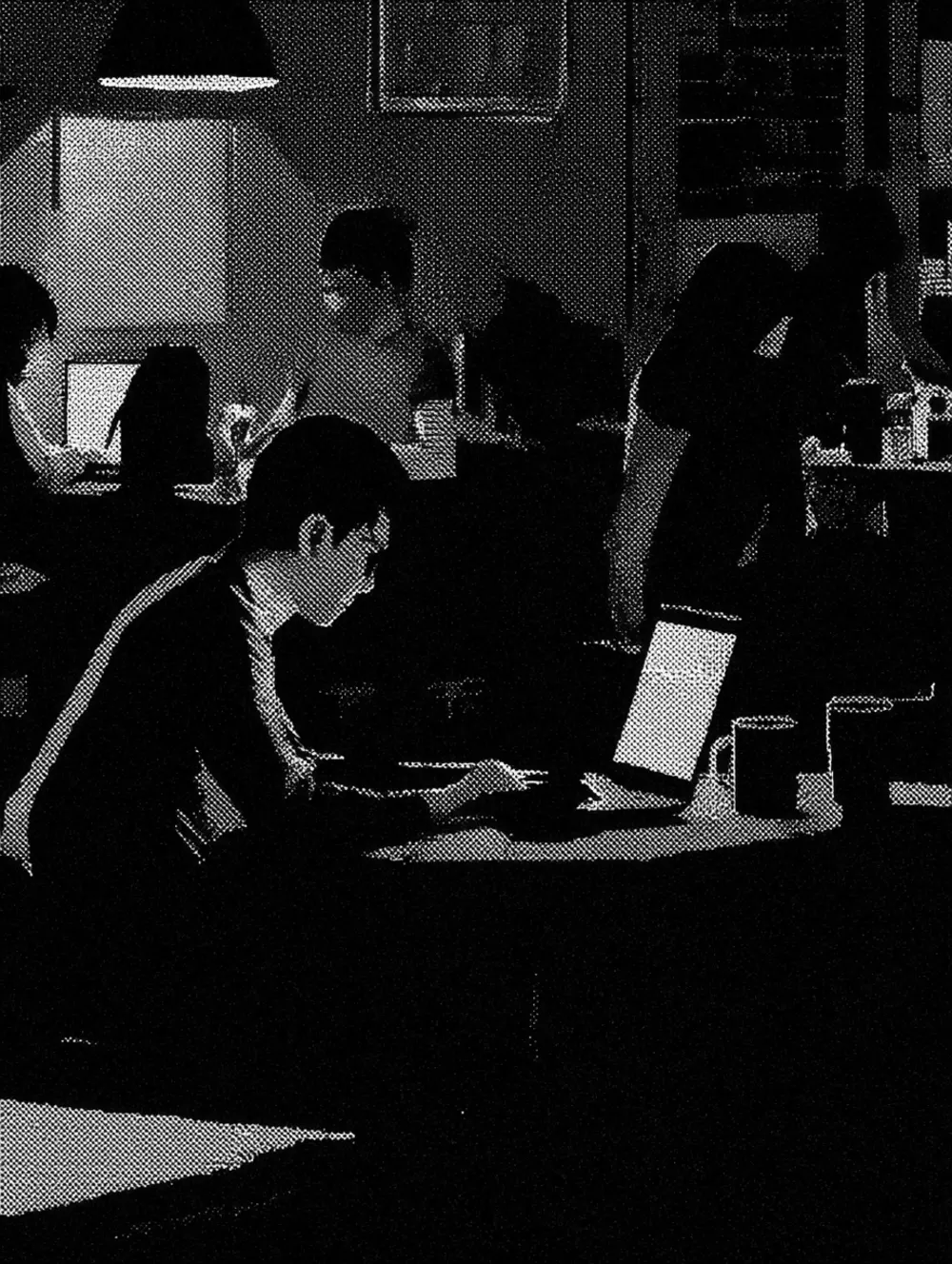
Long nights in the TC Games Research Lab: studying, designing, board game nights every Tuesday. It was here that I first seriously grappled with JavaScript. The answers were close, just beyond the edge of my understanding. I resolved to conquer that piece of land, and keep learning and building. I was a coder now.
New York itself was nothing like Los Angeles or the pictures in my head. Everyone walks. You rub elbows in a packed train car. The sidewalks are wide, the city alive, perpetually in motion. Then covid happened. The winters got too long. It was time to go back.

04 Back to Los Angeles
My first coding job was with ExploreLearning. I was essentially doing archaeology, working with simulations created in the Macromedia Director era and ported over to pre-ES5 JavaScript — jQuery, with RequireJS connecting the modules.
Learning where the web came from made me a better engineer. I don’t complain about modern tooling anymore, because I’ve seen how bad it used to be.
At Gallatin I work with the newest tools, at a pace that can only be described as agentic. I’m asked to do more, too — UI and UX, technical project management, the backend when it needs me. I get to do all of it, because of AI.

05 Now
Front end is the launching pad, not the ceiling.
Working agentically I write across the stack — blockchain, agent infrastructure, agentic commerce, and the trust and safety layer underneath it.
I’ve been building harnesses since back in the day. I’m always experimenting and fiddling with skills and orchestration. Right now I’m deep in evals, retrieval, and observability — everything it takes to stand an agent system up inside a stack and prove it works.
As they say, today is the worst it’ll ever be. I’m excited to see where all of this goes.
I write about it here →